Sioux Tribe
Learn about the Sioux Tribe and the Dakota conflict.
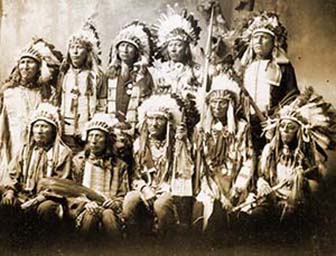
The Sioux tribe was actually made up of three divisions of seven tribes. This is also known as the Seven Council Fires (Oceti Sakowin in the Sioux language) or the Great Sioux Nation. They speak four different dialects of the Sioux language.
The Sioux tribes are divided by three geographic regions. The Dakota, also known as the Santee, represent the first four council fires. They live in between the forks of the Mississippi and Missouri Rivers. The Nakota is made up of the Yankton and Yanktonai tribes. They are located between the Missouri and James Rivers. The final division is the Lakota. The Lakota Sioux tribe is divided into seven bands: The Oglala, Brule, Minniconjou, Sans Arcs, Oohenopa, Sihasapa, and the Hunkpapa. Both North Dakota and South Dakota are named after the Dakota Sioux tribe. The name Minnesota was born from Siouan origin. Mni means water and sota means hazy, not clear. Omaha, Nebraska, Ponca City, Oklahoma and the states Kansas, Iowa and Missouri are named for cousin Siouan tribes.
The Sioux held an uprising (also known as the Dakota Conflict) in 1862 against the United States Army. It began along the Minnesota River and hundreds were killed. It is said that between 300 and 800 settlers were killed, making it one of the largest death toll of civilians. One reason for the uprising of the Sioux tribe was that the Dakotas were not being paid the money promised to them for their land. They were cheated out of over three million dollars as well as not receiving the food promised them. Failing crops also helped add to the problems. The payment for land finally arrived two days after the conflict began, but it was too late.
Convicted of murder, thirty-eight men of the Dakota Sioux tribe were executed. The government also decided to close down the reservation and to cancel all previous treaties signed with the Sioux tribe.
Related Stories:
Sioux Tribe Sioux Indians Sioux Indian Tribe Lakota Indians Sioux Weapons Chief Crazy Horse Articles Home PageThe following lists catalog the specific articles, stories, legends and research materials of this website.
American Indian Topics | American Indian Products | American Indian Tribes
Native American Topics | Indigenous Peoples’ Literature
