Sioux Indians
It is beleived the Sioux Indians actually came to North America from the continent of Asia thousands of years ago.
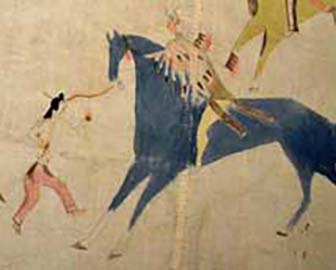
The Sioux Indians actually came to North America from the continent of Asia. The name Sioux actually means “little snake”, which was given to the tribe by the Chippewa Indians. The features of Sioux Indians that particularly stand out is their long, straight jet-black hair, representative of people descending from Asia.
Generally, the Sioux Indians were nomadic, meaning that they never really stayed in one place for a very long amount of time. Typically they followed the pattern of the buffalo, assuring them that there would be food and clothing wherever they traveled. The Spanish introduced horses to the Sioux in the 1500’s. Once they began to use horses as a means of carrying articles and transportation, life became much easier, particularly since they were living a nomadic lifestyle. The tribe had chiefs designated for various aspects of life, including war, civil rules, and of course, medicine men. The men of the tribe could become chiefs eventually if they demonstrated strong warrior skills.
Once the 1860’s came around, the fight over land got quite intense. The Sioux Indians battled the white man in order to keep their land. Eventually, the United States government signed a treaty allowing them to keep a portion of the land, otherwise known as a reservation. Once the gold rush took place, rumors abounded that there was gold located on Sioux land. Again, a battle ensued and the Sioux joined up with the Cheyenne tribe. The battle was led by the legendary Sitting Bull. Over the next couple of decades, the Sioux Indians traveled to the Dakotas. They took place in the famous battle known as Custer’s Last Stand, and ended up killing all of the soldiers that attempted to attack them. Unfortunately in 1891 the Battle of Wounded Knee occurred, and the Sioux lost the battle, losing many people in the fray. Today, there are about 30,000 Sioux Indians living in South Dakota, and still other in Nebraska, Montana, and Canada.
Related Stories:
Sioux Indians Sioux Indian Tribe Sioux Tribe Lakota Indians Sioux Weapons Chief Crazy Horse Articles Home PageThe following lists catalog the specific articles, stories, legends and research materials of this website.
American Indian Topics | American Indian Products | American Indian Tribes
Native American Topics | Indigenous Peoples’ Literature
