Lakota Indians
The Lakota Indians are a tribal Native America group that resides in the northern part of the United States.
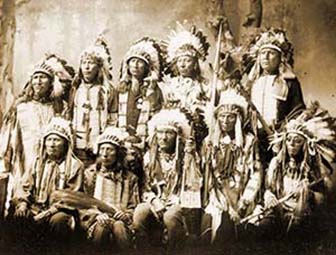
The Lakota Indians, also called Native Americans are considered a first nation of North America. Although a large number of Indians have immersed themselves into American culture, several tribal groups carry out their daily affairs on Indian reservations. The Lakota Indian's primary location is in South Dakota and North Dakota. Furthermore, this particular Indian tribe speaks the Lakota language, which is a dialect of the Sioux tribal group.
The number of Lakota Indians is slightly lower than other tribal groups. Today, there are only about 70,000 registered Lakota Indians. Less than half of these continue to speak the ancestral language. The Lakota Indians can be traced back to the Lewis and Clark expedition. During this time, the Lakota Indian tribe accompanied much of the Great Plains. Because of ongoing warfare, the tribal group was forced northward, and settled in the Dakotas.
The majority of the Lakota Indians reside on one of five Indian reservations situated in the Dakotas. Furthermore, Montana and parts of Canada also have a large Lakota population. While living within the boundaries of the reservation, the Lakota Indians are governed by their own set of laws. Hence, the tribal group has a separate political system, police department, education system, etc.
The Lakota Indians have strong cultural and spiritual ties. For the most part, the Indians strive to preserve their way of life. From youth, parents train their children in the values and morals of their tribal group. In an effort to better understand their background, many Indian-Americans of Lakota descent may acquire resourceful information on the Lakota Indians, as well as visit the Lakota Indian reservation. This is a great way to become knowledgeable of the philosophy, customs, and history of the Lakota tribal group.
Related Stories:
Lakota Indians Articles Home PageThe following lists catalog the specific articles, stories, legends and research materials of this website.
American Indian Topics | American Indian Products | American Indian Tribes
Native American Topics | Indigenous Peoples’ Literature
