Indigenous Peoples' Literature
American Indian Art
American Indian Jewelry
American Indian Pottery
Anasazi Pottery
Arrowheads
Baby Papoose
Beads
Bead Bracelet
Bead Jewelry
Bead Necklace
Bead Supplies
Black Hills Gold Jewelry
Bone Beads
Bow and Arrows
Braids
Braided Rugs
Buffalo Jerky
Buffalo Steak
Handmade Moccasins
Horse Blankets
Indian Art
Indian Artifacts
Indian Blankets
Indian Bridal Wear
Indian Clothes
Indian Costumes
Indian Dresses
Indian Drums
Indian Flag
Indian Flute
Indian Headdress
Indian Headress
Indian Jewelry
Indian Jewelry 2
Indian Masks
Indian Motorcycles
Indian Movies
Indian Rugs
Indian Tepee
Indian Weapons
Indian Wedding Dresses
Inuit Art
Inuit Jewelry
Inuit Masks
Inuit Paintings
Kachina Dolls
Moccasins
Native Flutes
Navajo Jewelry
Navajo Rugs
Northwest Indian Art
Pueblo Pottery
Sioux Art
Southwest Art
Southwest Blankets
Southwest Indian Pottery
Southwest Rugs
Sterling Silver Jewelry
Teepees
Throwing Knives
Tlingit Art
Tlingit Masks
Tribal Art
Tribal Decals
Turquoise
Turquoise Jewelry


Horse Blankets

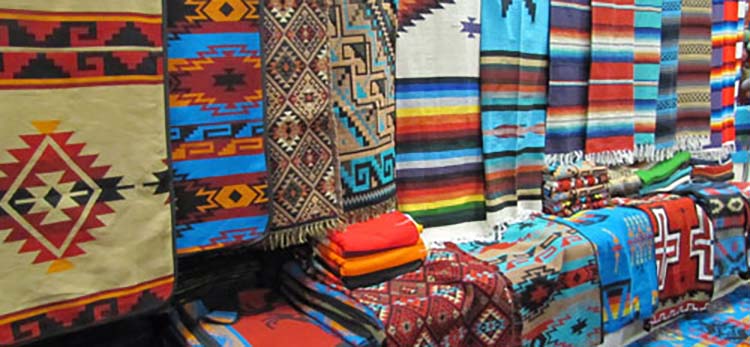
Blankets have long been an important part in the historic culture of Native Americans.  They have been used in every capacity, from keeping a child warm on a cold day to using them as horse blankets to cushion against saddles. Regardless of the use, many of these woven blankets reflect a rich heritage of the Indian people.

Before the Spanish introduction of horses to the Indian people, what we know as horse blankets today were actually used in a variety of ways.  Bartering these blankets with neighboring tribes or the white man was common.  In addition, they were used in religious and spiritual ceremonies, powwows, and other rites of passage.

Once horses entered the Native American culture, the Indians found a great use for the blankets.  Either as a cushion for a saddle or from riding bare back, horse blankets were born from necessity.  Made primarily from wool, these blankets were soft, warm and withstood a lot of use.  In fact, some horse blankets were used not only as regular blankets for people, but they were also used as rugs. 

The Native Americans put a lot of work into weaving these blankets.  Cleaning, then spinning the wool for use in the blankets was hard work.  There was also the use of organic dyes made from various plants and vegetables to create a variety of colors.  Finally, they weaved these blankets, incorporating a variety of patterns.

There are very few, if any, Indian horse blankets left from the 1800s and early 1900s.  The reason being is that these blankets were well-used and simply wore out.  That is why when a genuine blanket from that era is available for sale, it will command high prices.  You can still find horse blankets today made by the Native Americans.  Many are of a Navajo design and used for other purposes like decorative home items. These are very affordable and make for an attractive display in any home.

Disclaimer: Indians.org does not personally endorse or support any of the comments made within the writings of this article.