French and Indian War
Talks about different circumstances that sparked the French and Indian War.
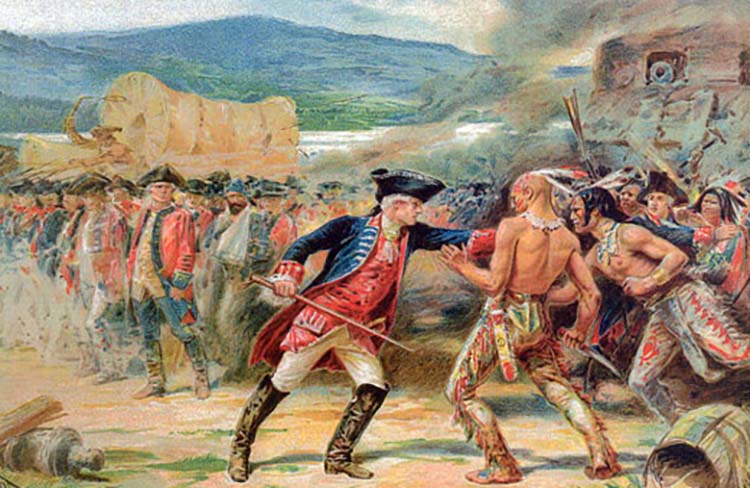
The French and Indian war was a nine-year battle between France and England. The war sparked when both Britain and France claimed territories in the New World. This territory was the area between the Appalachians and the Mississippi River. At the time, the Native Americans inhabited the land. The Indians eventually allied with France. Because this war is known in the United States as the French and Indian war, many assume the title refers to an on-going battle between the French and Indians. Quite the contrary, the war's title refers to the alliance between the two groups.
This war was different from other battles fought. For the most part, previous wars started in Europe, and then spread to other parts of the world. However, the French and Indian war started in North America, or the New Nation. Since the cause of the conflict involved land in the New Nation, war erupted in North America. The conflict lasted two years before England officially declared war in 1756. For the next nine years, the French and British battled for dominance. In the beginning, the French enjoyed many successes such as the defeat of General Braddock in 1755. Early success was attributed to the Native American allies. The Indians feared the British, and believed the settlers would drive them away from their homes.
However, France's victories were short-lived. In 1757, British forces successfully captured Fort Duquesne. Two years later in 1759, the success continued with the capture of Forts Quebec and Niagara. Once the French city Montreal collapsed, Britain had gain power to take control.
The French and Indian war concluded in 1763 with the signing of the Treaty of Paris. Before the war's finale, the battlefield extended to Asia, Europe, and Africa. Unfortunately, France lost control of its colonies, and England gained possession of Canada and the territory between the eastern United States and the Mississippi River.
Related Stories:
French Indian War Articles Home PageThe following lists catalog the specific articles, stories, legends and research materials of this website.
American Indian Topics | American Indian Products | American Indian Tribes
Native American Topics | Indigenous Peoples’ Literature
