Dances with Wolves
Learn the Native American connection with Dances with wolves, starring Kevin Costner.
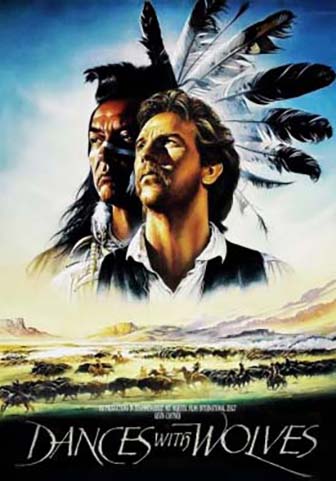
Many of the supposedly Indian names, such as the one made popular by Kevin Costner in the movie, Dances with Wolves, does not have the meaning that most people think it does. His name, Steve, was not translated into “Dances with Wolves” but the Indian name Sunkmanitu Tanka Owaci can be translated to Dances with Wolves. There are some cases where the name actually has a real Native American origin, but many are given a fanciful and thoroughly incorrect 'translation' that somebody thought would appeal to parents choosing a name for their child.
In other cases the names were invented by white authors or television writers. For works of fiction, especially old Westerns and romance novels, their fictional meanings have been faithfully repeated as fact, when they really are fiction. Others use place names that really have no meaning.
There have also been honest mistranslations--word order is different from English in many languages, so an English speaker looking at an Indian phrase may unwittingly pick out a word and mistake it for another.
Sometimes baby name book authors make up these names to sound exotic, but they are deliberate lies. The origins of others may never be known--if they once came from an Indian name or word, they have been too corrupted over time to be easily recognized any longer. Some names that are reputed to have a Native American meaning are always open to question. If the supposed meaning of a name is false, that doesn't necessarily mean it doesn't have Indian origins at all--it could have just acquired a false 'translation' at some point. There were around 300 Native American languages spoken in North America before Columbus arrived, after all, and only half of these are still spoken today. So it is impossible to say for sure that any name definitely does not have any Indian origins. Only that it does not mean what it is claimed to.
Dances with Wolves, a 1990 American Western film starring directed and produced by Kevin Costner. It is a film adaptation of the 1988 book of the same name by Michael Blake that tells the story of a Union Army lieutenant who travels to the American frontier to find a military post, and of his dealings with a group of Lakota Indians. Dances with Wolves won 7 Academy Awards, including Best Picture and the Golden Globe Award for Best Motion Picture – Drama. Much of the dialogue is spoken in Lakota with English subtitles.
In 2007, Dances with Wolves was selected for preservation in the United States National Film Registry by the Library of Congress as being "culturally, historically, or aesthetically significant"
Related Stories:
Dances with Wolves Articles Home PageThe following lists catalog the specific articles, stories, legends and research materials of this website.
American Indian Topics | American Indian Products | American Indian Tribes
Native American Topics | Indigenous Peoples’ Literature
