Crazy Horse Monument
Learn about the work in progress art piece known as the Crazy Horse Monument.
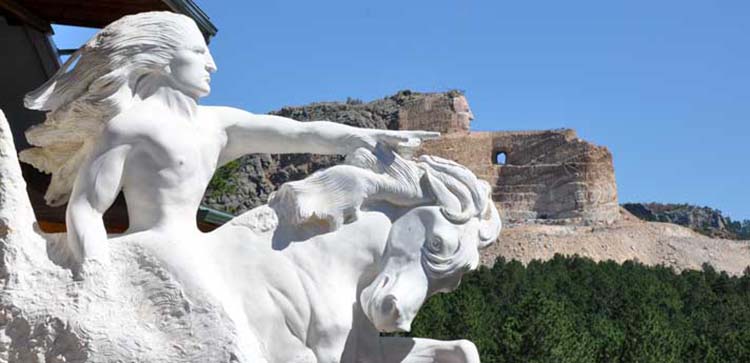
Fiercely dedicated to his people and a hero to the Lakota Sioux Indians, Crazy Horse was the natural choice for the largest sculpture in the world dedicated to honoring the Native American Indians. Located in South Dakota’s Black Hills not far away from Mount Rushmore, the Crazy Horse Monument is a work in progress, started back in 1948!
Crazy Horse had a vision and was devoted to preserving the culture and traditions of his people. He died young, at the hands of an American solider who stabbed him in the back. Because of his humility and valor, his spirit lives on in the land and the many stories handed down through generations of Lakota Sioux Indians. The Crazy Horse Monument embodies this proud heritage of the Native American people.
Lakota Chief Standing Bear and sculptor Korczak Ziolkowski started the ball rolling in 1946 by identifying Thunderhead Mountain as the place to create the Crazy Horse Monument. By 1948, the first explosives were detonated to start sculpting the rock face. Much like the construction of Mount Rushmore, the monument is being created in a special explosive engineering process. Holes have to be drilled in order to place the charges and punch through the rock. This action helps shape the rock. A special torch creates the smooth finish of the monument.
Even though the sculptor died in the 1980s, the work on Crazy Horse Monument continues and lives on through his family. With only private donations and paid tours, the sculpting process is slow but steady. There is also a museum and cultural arts center associated with the monument and is open to the public. While the work may take many more years, the dedication to completing the Crazy Horse Monument serves only to honor the life of this great warrior and that of his Native American people, both past and present.
Related Stories:
Crazy Horse Monument Articles Home PageThe following lists catalog the specific articles, stories, legends and research materials of this website.
American Indian Topics | American Indian Products | American Indian Tribes
Native American Topics | Indigenous Peoples’ Literature
