|
|
Amazon Indians American Indians Anasazi Indians Apache Indians Apache Indian Apache Tribes Aztec Indians Blackfeet Indians Blackfoot Indians Blackfoot Indian Tribe Cherokee Indians Cherokee Indian Cherokee Tribes Cheyenne Indians Cheyenne Tribe Chickasaw Indians Chippewa Indians Choctaw Indians Chumash Indians Comanche Indians Cree Indians Creek Indians Crow Indians Eastern Woodland Indians Hopi Indians Iroquois Indians Kokopelli Lakota Indians Maya Indians Mayan Indians Mohawk Indians Navajo Indians Nez Perce Indians Northwest Coast Indians North American Indian Osage Indians Paleo Indians Pawnee Indians Pueblo Indians Plains Indians Potawatomi Indians Seminole Indians Seneca Indian Tribe Shawnee Indians Shoshone Indians Sioux Indians Sioux Indian Tribe Sioux Tribe Southwest Indians Taino Indians The Mohawk Tribe Tlingit Indians Wampanoag Indians More Native Information:
|
||
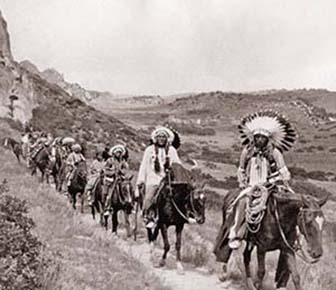
Comanche IndiansThe Comanche Indians numbered as many as 20,000 in their heyday. Today, there are approximately 10,000 members of the Comanche Nation. Today, the majority of Comanche Indians live in Oklahoma. Those not located in Oklahoma can be found living in Texas, California, and New Mexico. Historically, the Comanche Indians lived in New Mexico, Colorado, Oklahoma, Kansas, and Texas. The name Comanche is believed to come from the Komantcia, the Spanish, which is their way of saying the Ute word Kohmahts, which means “people.”
The Comanche Indians were seen as a separate group around 1700, having broken away from the Shoshone people. At the same time, the Comanche Indians acquired horses, which allowed them to look for better hunting grounds. Unfortunately, the Comanche never formed a cohesive group, but remained almost a dozen different groups just as likely to fight amongst themselves as help each other. The Comanche Indians did not have a central leader but a small number of leaders who served on a council that made decisions. This council consisted of two chiefs, the peace chief and war chief as well as other leaders. The peace chief was an older male tribe member who was usually seen as having much experience. The war chief was elected during times of war and was usually someone seen as a brave warrior. The council made decisions such as where the tribe should hunt and whether they should declare war on another tribe. As with most tribes, the Comanche men were in charge of hunting and fighting, while the women were busy at home cooking and setting up the camps. The Comanche Indians saw children as a gift and therefore rarely punished them. An older sibling, another relative, or a “boogey man” administered any discipline of a child. The “boogey man” was another adult, usually an elder tribesman, who wore sheets to frighten rebellious girls and boys. If that did not work, they were told the story of the Pia Mupitsi or the Big Cannibal Owl that lived in a cave in the mountain and ate bad children at night. Disclaimer: Indians.org does not personally endorse or support any of the comments made within the writings of this article.
|
||
|
More Native Information:
|
Tribal Directory - Indigenous Peoples' Literature - Welker's Bookmarks Host your website and Unlimited DomainsFREE when you purchase with PowWeb!!! © 2009 Indians.org |