Chumash Indians
The Chumash Indians were native to southern California and Channel Islands.
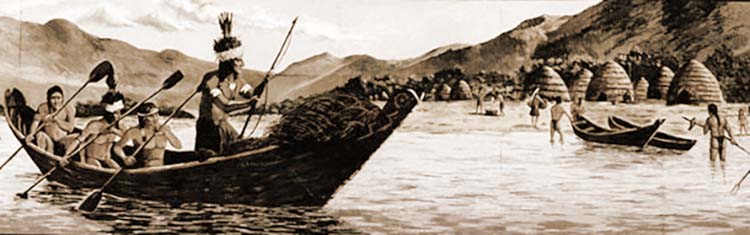
The Chumash Indians mainly lived in the southern coastal areas of California as well as the Channel Islands. Today, many California cities still bear Chumash Indian names including Simi Valley, Point Mugu, and Malibu. Chumash is believed to mean either “bead maker” or “seashell people.” At one point, there were between 10,000 and 20,000 Chumash Indians. Because of disease, by 1900, the population had dwindled to 200. Today, there are approximately 5,000 people claiming to be of Chumash descent.
Traditionally, the Chumash Indians were hunter-gatherers. They were also very good fishermen, being among only two tribes to regularly navigate the Pacific ocean. Their canoes, called tomols, could be used for moving goods or even whaling. Because they had access to resources on both land and sea, the Chumash were one of the more prosperous Indian tribes in California. Unlike many Indian tribes, the Chumash women could be chiefs and priests. The chieftains were the richest and most powerful tribesmen and might reign over several villages. Once the chieftain died, his or her daughter or son could inherit the position.
The Chumash Indians were also great artisans, creating baskets that are housed at the Smithsonian Institution. The second largest collection of Chumash baskets is at the Museum of Natural History in Santa Barbara, which is the modern day sight of the Chumash homeland. Another type of Chumash art could be seen on the walls of caves. The Chumash conducted religious ceremonies in caves along the coastline. At first, they used charcoal to draw, but later used brighter colors such as red, orange and yellow. The drawings were simple, usually of people or animals. Today, these caves are protected by the National Parks system so future generations can enjoy them.
The Chumash Indians have a casino in Santa Barbara County. Like many tribes, the income from the casinos goes to help preserve their culture. The Chumash have implemented a language program where the younger members of the tribe can learn the language from their elders. They also used casino income to cross the Santa Barbara Channel, only the third time in 150 years that they Chumash people have done this.
Related Stories:
Chumash Indians Articles Home PageThe following lists catalog the specific articles, stories, legends and research materials of this website.
American Indian Topics | American Indian Products | American Indian Tribes
Native American Topics | Indigenous Peoples’ Literature
