Cheyenne Tribe
The Cheyenne tribe of Native American Indians is one of the most well known Indian tribes.
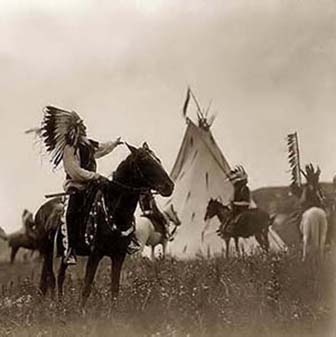
The Cheyenne tribe of Native American Indians were amongst what is now the most well known of plains Indian tribes. Often allying with the Sioux and Arapaho, the Cheyenne tribe originally lived in stationary villages in the eastern parts of the country and occupied much of what is now Minnesota until they migrated to the high plains in the early 1800s. They were divided into the Northern Cheyenne and Southern Cheyenne and ranged from the Missouri River to the Arkansas River.
The Cheyenne tribe were a proud people who valued their freedom and relationship with the created world. After acquiring horses from the Spanish, they hunted on horseback, relying heavily on the buffalo to provide much of life’s necessities. They lived in tepees, or tipis as is the Sioux spelling, and often migrated with the buffalo herds.
The men of the Cheyenne tribe were considered to be brave providers and the women virtuous. Though the buffalo provided food, bone for tools and weapons, and hide, their clothing was typically made of buckskin, which was softer in texture than buffalo skin.
The Cheyenne tribe were ceremonious and celebrated many events and accomplishments through tribal rituals. The smoking of the peace pipe was one such ritual that the men of the Cheyenne tribe highly valued and was a routine custom at council meetings. Storytelling was another valued custom and a way of preserving their past. Their language is part of the Algonquian language and is still spoken by many Cheyenne descendants.
After the onset of the gold rush the Cheyenne tribe, like many other plains Indians, were eventually forced off their land and onto reservations. Today, the Northern Cheyenne reside primarily in Montana on their own reservation and the Southern Cheyenne tribe resides in Oklahoma. The Cheyenne Cultural Center is located in Clinton, Oklahoma.
Related Stories:
Cheyenne Tribe Articles Home PageThe following lists catalog the specific articles, stories, legends and research materials of this website.
American Indian Topics | American Indian Products | American Indian Tribes
Native American Topics | Indigenous Peoples’ Literature
