Canoes
Native Americans made Canoes from trees, burning and carving out the hull.
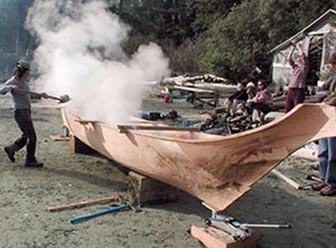
Canoes is the form of transportation used by Native American tribes living near rivers, lakes and oceans. The construction and style of canoe varies from region to region, but is most often dugout and bark styles. Indians built these birch-bark canoes by trial and error. Once they discovered a working form of the boat, it has not been improved much. Today canoes look very similar to the original Native American canoes.
Dugout canoes are formed from hollowed out logs. The type of wood used depends on the trees available in the region. In the colder Northern regions, dugout canoes often feature a closed deck to protect from the elements.
On the West coast, larger, open canoes were common. In the Pacific Northwest, some canoes were built as large as one hundred feet long and seven feet wide, and could hold up to sixty people. Bark canoes are constructed of sapling frames covered in bark. Birch bark is very popular for both its durability and its relatively light weight.
The common canoe layout features high sides and ends to keep the vessel from taking on water in rough seas. The design of canoes has changed little over the history of Native Americans, although we know this primarily through the sketches of early European explorers. Canoe materials are biodegradable and very few archeological remains have been discovered.
Most Indian canoes were lightweight, small, and fast though the Iroquois built their canoes at length's of 30 feet. These were used to hold up to 18 passengers or to help move merchandise. An advantage over a row boat is while in a canoe, you face forward in the direction of travel. Canoe designs varied from tribe to tribe but each canoe took quite a bit of talent to produce. Some were sewn together while others used spruce gum for caulking. Carving was essential and some burned the inside of the canoe to help it become waterproof.
Related Stories:
Canoes Articles Home PageThe following lists catalog the specific articles, stories, legends and research materials of this website.
American Indian Topics | American Indian Products | American Indian Tribes
Native American Topics | Indigenous Peoples’ Literature
