Apache Indians
The Apache Indians came from the Alaskan region, Canada, and portions of the American Southwest.
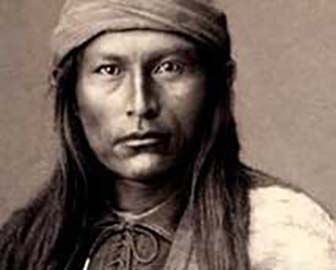
Eventually the tribe migrated toward the United States further south, and divided itself into two basic regions, with the Rio Grande River serving as the dividing line. The Apaches were typically nomadic, meaning they traveled around, never quite settling in one place.
They mostly survived by eating Buffalo meat, and using their hides as protective clothing. It has been said that they were one of the first tribes to learn how to ride and use horses. By 1700, a large portion of the Apache Indians had migrated to the Kansas plains. They were not accustomed to living and farming on the plains, but made due with some crops such as watermelon, beans, and corn. Eventually, their weakness was overtaken by the Comanche tribe.
The Apaches were defeated and their land was seized, causing them to move onward to areas like New Mexico and Arizona. Still others went even more southward into Texas and parts of Mexico.
Around the 1730s, the Apache Indians began to battle with the Spaniards. The battles were long and bloody, and often resulted in many deaths.
Finally in 1743 a Spanish leader agreed to designate areas of Texas for the Apaches to live, easing the battle over land. In a ceremony in 1749, an Apache chief buried a hatchet to symbolize that the fighting was over, thus the term we use today, “bury the hatchet.” As time went on, the Apache Indians developed a strong bond with the white men of the area. At first relationships were strong, and the Apache felt protected. As things progressed, however, raids began to take place that included the slaughter of their people and the theft of their goods and livestock. As of 1940, there was a record of only 35 Apache Indians living in the state of Oklahoma, and in 1970 a record of about 1,500 were documented in New Mexico.
Related Stories:
Apache Indians Apache Indian Apache Tribes Southwest IndiansArticles Home Page
The following lists catalog the specific articles, stories, legends and research materials of this website.
American Indian Topics | American Indian Products | American Indian Tribes
Native American Topics | Indigenous Peoples’ Literature
